Heart (noun)
Understands people beyond data. Recognizes confusion, context, and behavior, ensuring solutions are not just usable, but meaningful and trustworthy.
The designer (noun)
A problem-solver who takes responsibility for how systems affect people. Balances logic, empathy, and constraints to make decisions that are clear, intentional, and hold up in real use.
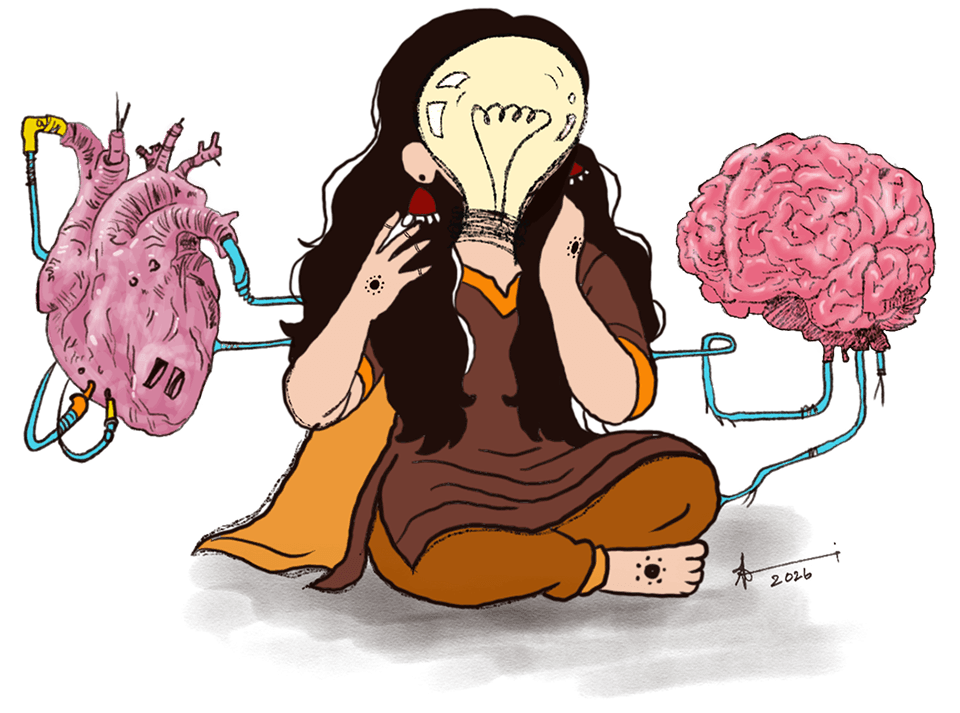
Brain (noun)
Understands systems, patterns, and edge cases. Breaks down complexity, questions assumptions, and brings structure to decisions.



About Me
I didn't start with interfaces.
I started with observation. Watching how people struggle, adapt, and make decisions in everyday systems.
Coming from Architecture, I was trained to think in structure. But over time, I became more interested in people, their behavior, confusion, and the small moments where design either helps or fails.
That shift led me to User Experience Design.

Artifacts, 2026
Today, I work as a UX and Interaction Designer, focusing on designing systems that are clear, usable, and grounded in real-world context.
My work often begins where things are unclear, overcrowded information, low trust, poor decision-making, or broken flows.
Most of my work begins in places where there is friction, too much information, unclear flows, low trust, or difficulty in decision-making.
I don't try to remove complexity entirely.
I try to make it understandable.
“When I design, I focus on how a system guides, not just how it looks.”
I often find myself asking: What would this feel like to use when someone is tired, unsure, or under pressure?
The Approach
How I work?
I'm organized: not in a rigid way, but in a way that helps me manage complexity. I value clear structures, thoughtful documentation, and designs that others can easily understand and build on.
I adapt as things evolve.
Many of the problems I've worked on have changed midway, and I'm comfortable revisiting assumptions when new insights emerge. I don't get attached to solutions. I stay committed to clarity.
Mindfulness plays a quiet role in how I design. I pay attention to cognitive load, pacing, and when a system should step back instead of demanding attention.
Sometimes, the best interaction is the one that stays out of the way.

Energy. Curiosity. Loyalty. Focus. Presentness.
What Pixel, my Beagle, teaches me.
The Philosophy
What matters to me?
I care about making systems feel calm, understandable, and genuinely helpful, especially in moments where people are learning, uncertain, or under pressure.
I see design as a responsibility to reduce confusion, support decisions, and build systems people can trust.
That's the thread across my work, making systems work better for real life.